
A reaction is not the same as an experience
Interactive technology can create an immediate reaction.
A visitor waves a hand and a screen changes. A camera transforms their silhouette. A sensor triggers a sound. An AI system generates an unexpected image.
For a few seconds, the technology itself can be enough to make someone stop.
But that does not automatically make it a good interactive experience.
When Eduardo from We Are Interactive is asked what separates a cool technology demonstration from a genuinely strong interactive experience, his answer is simple:
“The Experience design.”
A tech demo proves that something can happen. Experience design decides why it should happen, what the visitor contributes and what the interaction communicates.
That distinction matters for museums, events, brands and cultural spaces investing in interactive technology. Novelty can attract attention. Design is what turns that attention into something meaningful.
What is a tech demo?
A tech demo is built primarily around a capability.
It might demonstrate that a camera can track a body, that LiDAR can detect a touch point across a large wall, that generative AI can transform an image or that a projection can react to movement.
Those capabilities can be impressive. They are also useful during research and development because they allow a team to understand what a technology can do.
The problem comes when the demonstration becomes the finished experience without another layer of thinking.
“With a tech demo, you can have a small moment of engaging fun But you’re not going to learn much from it, and you’re not going to find it that interesting if the design isn’t there.”
Eduardo — We Are Interactive
The visitor performs an action, sees the effect and moves on.
There is interaction, but there may be very little reason for that particular interaction to exist.
Experience design gives the technology a job
Good interactive design starts somewhere else.
Instead of asking, “What can we build with this sensor?”, the team asks what the visitor should do, feel, understand or discover.
That changes the role of technology.
A depth camera is no longer interesting because it can detect a silhouette. It becomes useful because the concept needs a visitor’s body to become part of the visual.
LiDAR is no longer interesting because it can measure distance. It becomes useful because a six-metre wall needs to understand exactly where someone intends to draw.
AI is no longer included because AI is a current technology. It becomes useful because the visitor’s simple input needs to transform into something richer and unexpected.
The technology now has a specific job inside the experience.
A real example: designing for the feeling of magic
For an energy-company event, We Are Interactive developed an installation around a 3 × 6 metre LED wall.
Visitors could move their hands across the display and create streaks of light. LiDAR detected where they intended to draw, custom software translated those movements into visual marks, and AI transformed the marks into patterns inspired by leaves, flowers and sustainability.
The technical stack included rotating LiDAR, TouchDesigner, Python scripts, AI processing and a large-format LED display.
But none of those components was the central idea.
“We wanted the interaction to feel like magic”
Eduardo — We Are Interactive
That sentence describes the design goal much better than a list of technologies does.
Every technical decision could then be evaluated against that goal. Did the wall respond quickly enough to feel connected to the visitor? Did the drawing appear where they expected it? Could they understand that the final AI image came from their movement? Did the transformation feel surprising?
The system was complex because the experience required several technologies to work together. The visitor did not need to understand any of that complexity.
They only needed to move a hand and see something happen that felt immediate, personal and unexpected.
Start with the visitor, not the technology
The same principle applies before a project reaches the technical stage.
If a museum comes to We Are Interactive and says, “We want something interactive,” Eduardo’s first question is not which technology they want to use.
It is:
“What’s your museum about?”
The subject, audience and message establish what the experience needs to accomplish.
From there, the team can ask better questions.
What should visitors learn?
Should they interact alone or together?
Should they create something?
Should the space react to them?
Should the interaction reveal information?
What should they remember afterwards?
Only then does it make sense to decide whether the solution needs a touchscreen, LiDAR, projection, spatial audio, a depth camera, AI, a physical object or something else entirely.
Simple interactions can be stronger than expensive ones
Interactive experiences do not become better in proportion to the amount of technology inside them.
One of the clearest lessons Eduardo has taken from years of watching people use installations is that visitors respond to the experience more than the technical complexity behind it.
“Even with simple interactive things you can do, you can create very interesting and amazing experiences,” he says. “You don’t have to be deploying crazy-expensive, state-of-the-art technology to achieve that.”
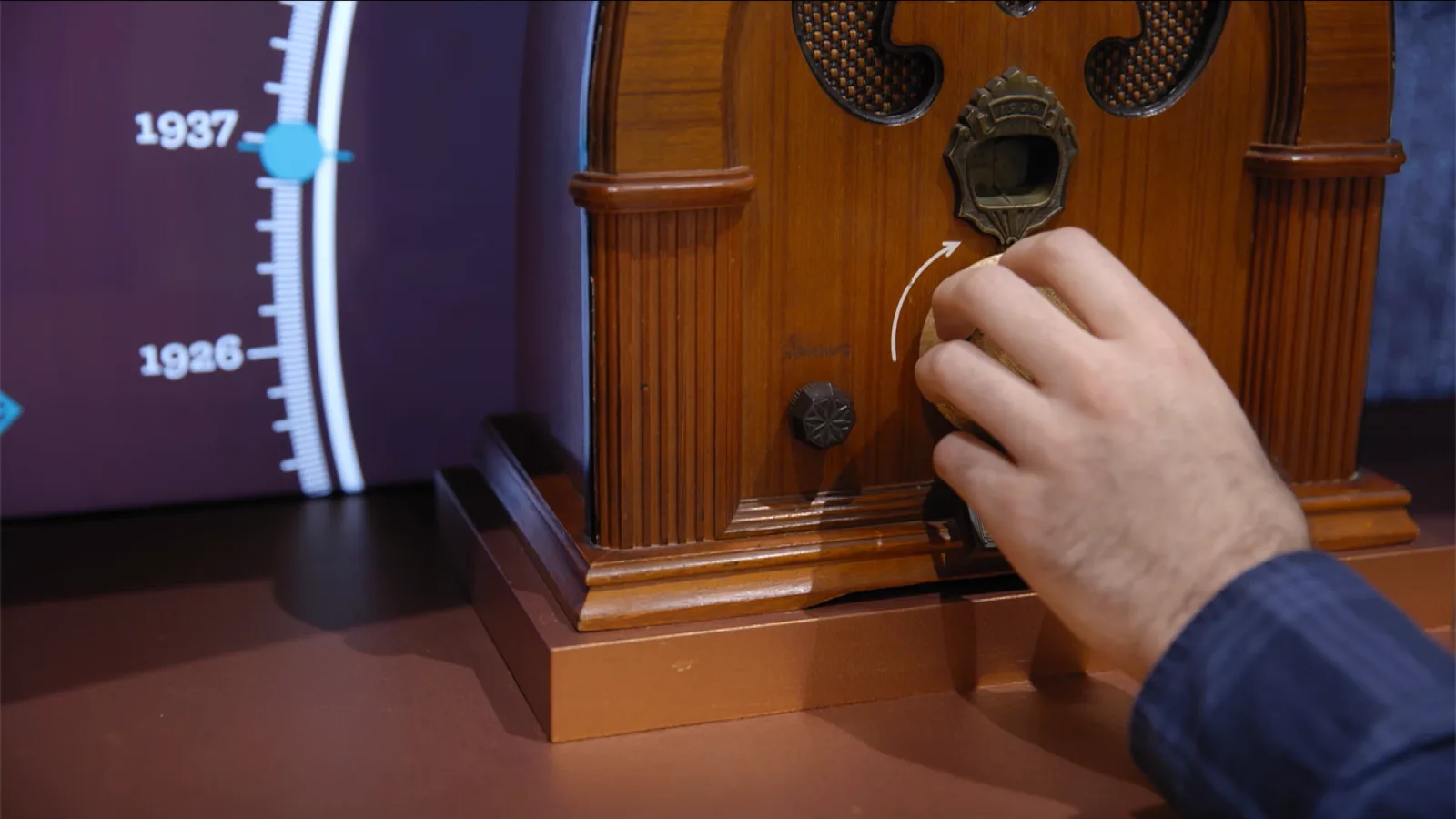
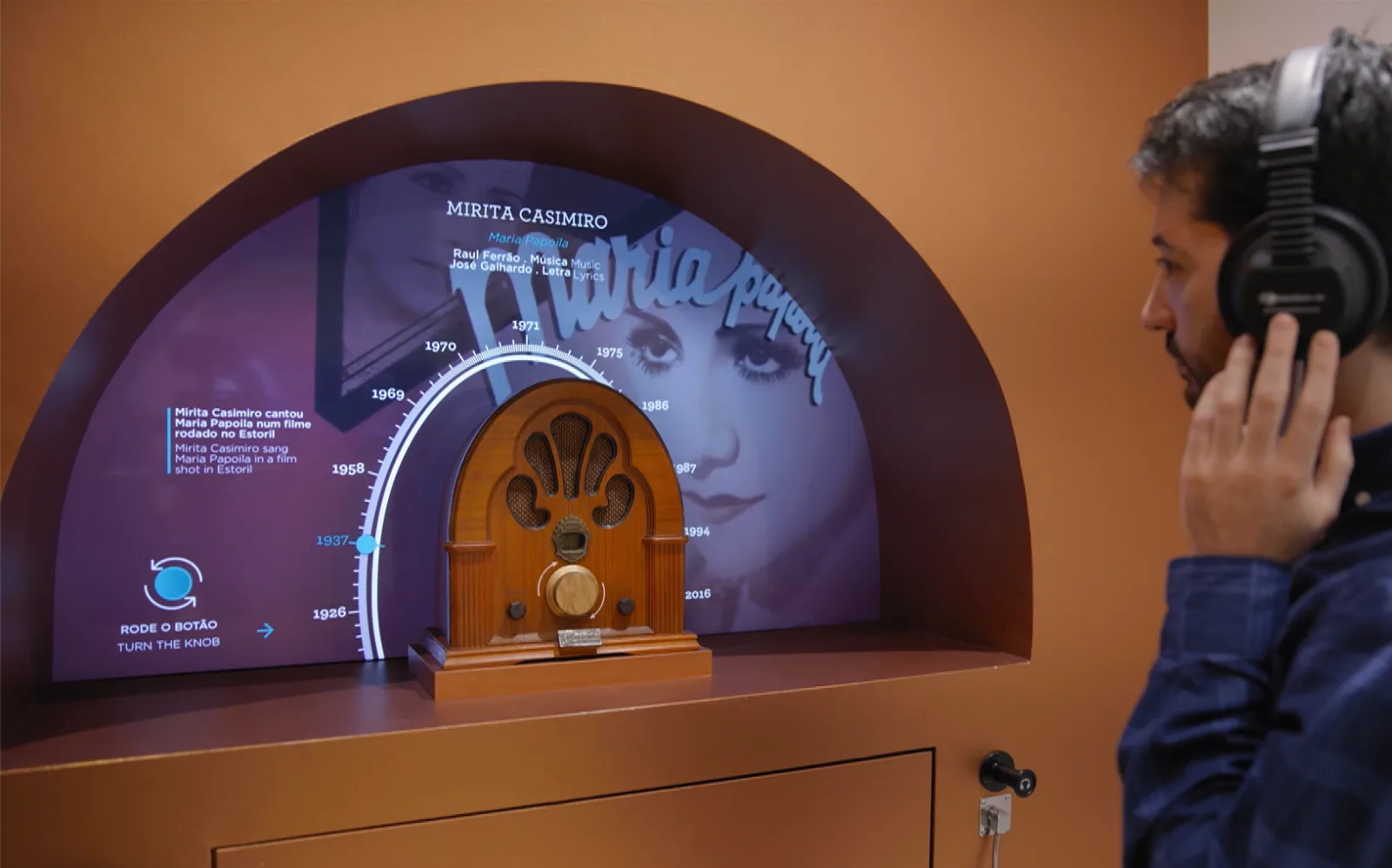
Consider a museum with an antique radio.
One approach would be to place a touchscreen beside it containing historical information.
Another would be to make the radio itself interactive. Turning its tuning dial could move the visitor through different periods in history, with each frequency revealing audio from another moment.
The second concept may use relatively simple technology behind the scenes. But the interaction belongs to the object, the story and the physical behaviour visitors already understand.
That is experience design doing more work than the hardware.
The best interface may not look like an interface
Interactive design becomes particularly interesting when visitors stop thinking about the interface at all.
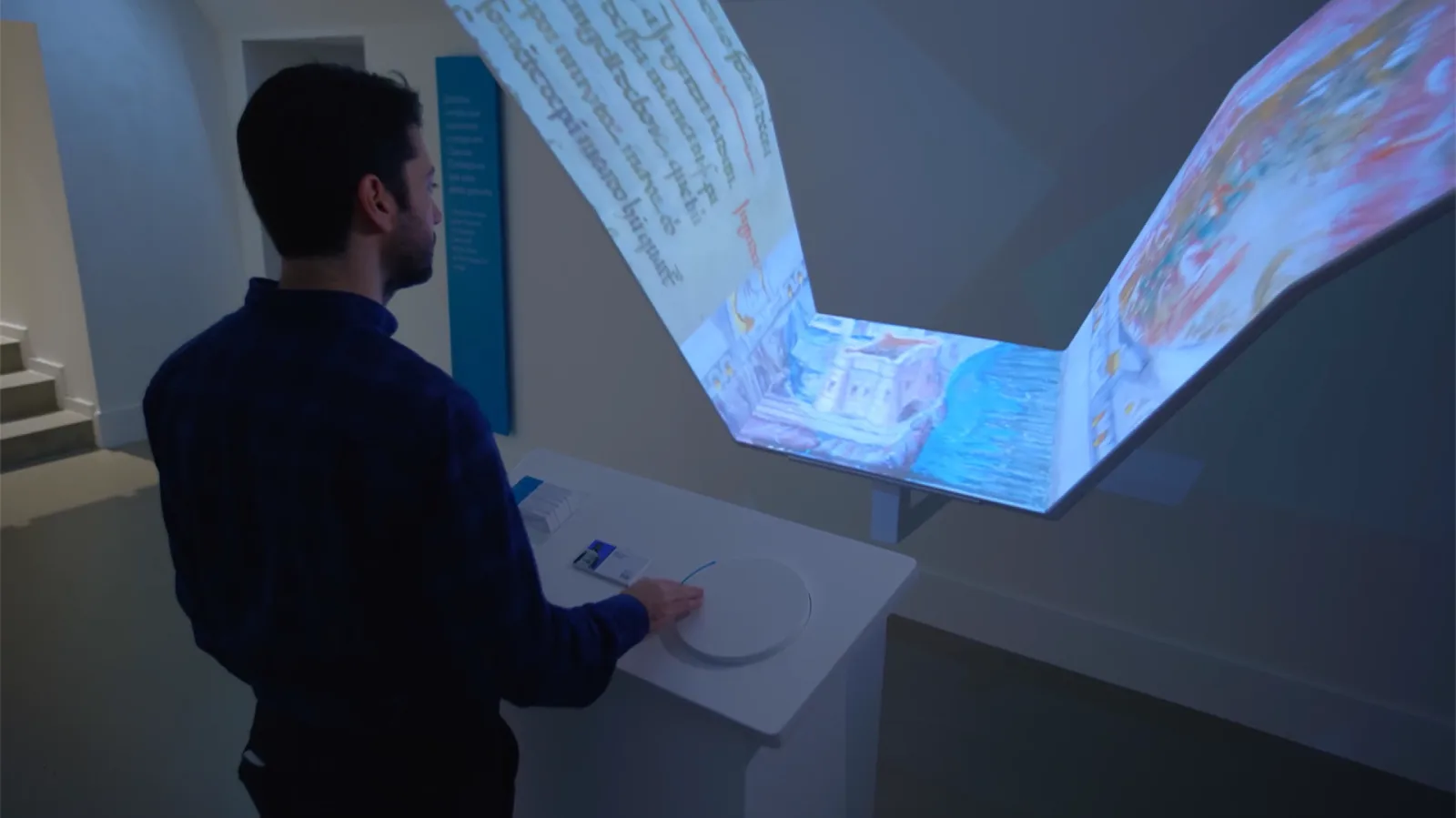
A touchscreen announces itself as something to operate. It comes with a visual language people already understand: buttons, menus, scrolling and tapping.
Physical spaces offer many more possibilities.
A visitor can walk, turn, throw, speak, point, touch an object, move a lever, stand in a particular place or interact with another person.
Sensors and software can translate those natural actions into digital responses.
This is one reason We Are Interactive tends to work between the purely physical and the purely digital.
“We like to develop solutions that are not just touchscreens or completely digital, but also not totally physical”
Eduardo — We Are Interactive
When those two sides are designed together, the physical environment itself can become the interface.
Good design makes cause and effect clear
One of the most important qualities of an interactive experience is that visitors understand that their action matters.
If someone moves a hand and a visual responds somewhere else, the connection feels weak. If they trigger something but cannot tell what they did, the interaction can feel arbitrary. If an AI system produces an output with no visible relationship to the visitor’s input, the technology may feel like a random generator rather than part of the experience.
Good design creates a clear relationship between action and response.
In We Are Interactive’s LED-wall project, the visitor first saw light strokes appear directly from their movement. That immediate feedback established control. The AI transformation then added surprise.
The two stages did different jobs.
One told the visitor, “The system sees what you are doing.”
The other told them, “Now look what your action can become.”
That sequence helped make a technically complex process intuitive.
Memorability is a useful design test
Interactive installations are often evaluated through technical questions.
Does the tracking work?
Is the frame rate high enough?
Is the calibration accurate?
Does the software run reliably?
Those questions matter. A professional installation has to work.
But they do not answer whether the experience is worth remembering.
For Eduardo, that is where design becomes decisive.
“Even if the technology fails, if the design is there, it’s going to be memorable. If the technology is working perfectly but the design fails, people are not going to remember it.”
The point is not that technical reliability is optional. It is that reliability alone cannot create meaning.
A perfectly functioning interaction with no idea behind it is still just a perfectly functioning interaction.
Watch what people choose to capture
One useful signal appeared during the interactive LED-wall project.
At the end of the experience, visitors received a QR code that allowed them to keep the image they had helped create.
But many people also took out their phones and recorded themselves using the installation.
They were not only interested in the output alone. They wanted to capture the process.
For Eduardo, that became one of the strongest signs that the experience had worked.
“I think that people taking videos of themselves using it was the biggest success,” he says. “It’s something they want to relive afterwards.”
For brands and event organizers, this behaviour has another consequence. An experience people naturally want to film can travel beyond the physical installation without having to be designed as an obvious social-media gimmick.
The shareable moment emerges because the interaction itself is worth capturing.
A practical test for an interactive concept
Before building an interactive installation, it is useful to test the idea without talking about the technology at all.
Can you explain what the visitor does in one sentence?
Can you explain why they would want to do it?
Does their action connect to the subject, brand or story?
Is the response understandable without instructions?
What changes because the visitor participated?
Would the idea still be interesting if the technology were less novel next year?
What should the visitor remember after leaving?
If those answers are weak, adding another sensor, screen or AI model is unlikely to fix the concept.
If the answers are strong, the technology can be selected and engineered around them.
Technology attracts attention. Experience design gives it meaning.
Interactive technology is evolving quickly. Sensors are getting faster. Real-time graphics are becoming more capable. AI can generate media that would have been difficult to create only a few years ago.
That gives experience designers a larger toolbox.
It does not remove the need to decide what to build.
For We Are Interactive, the technology is never the final reason an experience exists. It is material that can be shaped around a visitor, a place and an idea.
“People become amazed with the experience itself, not the technology itself”
Eduardo — We Are Interactive
That may be the simplest distinction between a tech demo and a great interactive experience.
One shows people what the technology can do.
The other gives people something worth doing with it.
Designing interactive experiences with We Are Interactive
We Are Interactive is a Portugal-based multimedia studio creating interactive installations for events, museums, brands and cultural spaces.
The studio combines experience design with technologies including LiDAR, depth sensing, projection, real-time graphics, audio, AI, sensors and custom software. Each project begins with the experience the audience should have, then builds the technical system around it.