
A wall does not need to be a touchscreen to behave like one.
With LiDAR, a large wall, floor or projection surface can respond to people moving through a space, reaching toward an image or even throwing an object at it. Instead of asking visitors to interact with a conventional screen, the technology can make the physical environment itself part of the interface.
At We Are Interactive, we use LiDAR when an experience needs to operate at a scale where a normal touchscreen stops making sense. The interesting part is not the sensor itself. It is what the sensor allows the experience to become.
What is LiDAR, and how does it work in an interactive installation?
LiDAR is a ranging technology. In simple terms, the system emits thousands of laser points that are invisible to the human eye and measures the light that returns. Those measurements tell the system how far away objects and people are.
For an interactive installation, those distance measurements can be translated into usable positions or touch points.
“We know when you are intercepting the light So with LiDAR, we know where people are at a certain moment or what they’re touching.”
Eduardo — We Are Interactive
That means a system can understand where a visitor is standing, where a hand is reaching or where an object crosses a defined plane. Software can then translate that information into an X and Y position and connect it to a visual, audio or physical response.
The result is that a surface which has no touch capability of its own can behave as though it does.
What can you create with LiDAR?
The most obvious use is turning a large wall into an interactive surface, but the same principle can support much broader spatial experiences.
If LiDAR is monitoring a large area, an installation can know where visitors are moving and respond to their position. Light beams can follow a person through a room. A projected floor can shift as people walk across it. A large display can react to hands moving across its surface.
Objects can become inputs too. Eduardo gives the example of throwing a ball at an interactive wall. The system does not need to detect the physical impact itself. If the ball crosses the LiDAR’s detection plane immediately in front of the wall, that interruption can be treated as the touch point and used to trigger the experience.
This opens up interaction at dimensions that would be difficult or impractical to achieve with a conventional touchscreen.
LiDAR vs touchscreens: when does LiDAR make more sense?
LiDAR is not a replacement for every touchscreen.
If a visitor needs to stand close to a display, read small text, browse detailed information or make precise selections, a conventional touchscreen can be the better tool.
LiDAR becomes particularly useful when the interaction needs to get bigger.
A large LED wall, projection or physical surface can be made responsive without needing the display itself to contain touch hardware. This gives experience designers more freedom to think beyond the dimensions and form of a standard screen.
For We Are Interactive, the decision starts with what the visitor should actually be able to do. If the experience needs detailed close-range interaction, touch may be appropriate. If it needs movement, scale or a large responsive surface, LiDAR becomes much more interesting.
LiDAR vs depth cameras: what is the difference for interactive experiences?
Another option for spatial interaction is a depth-sensing camera. We Are Interactive works with both technologies, but they solve different problems.
Depth cameras can be useful when the system needs to understand a person’s body, silhouette or movement. LiDAR can be a better fit when the important information is the position of an interaction across a defined surface.
That distinction mattered in one of our recent event installations.
An energy-company client wanted an experience in which visitors could create drawings through movement and see those drawings transformed by AI into imagery connected to sustainability. We considered depth-sensor cameras, but the goal was not to capture the visitor as a silhouette. We needed to understand where the visitor intended to draw across a very large display.
LiDAR gave us the coordinate-based interaction the concept required.
“We wanted to detect what the person intended to draw For that, the depth-sensor cameras were not the best solution.”
Eduardo — We Are Interactive
Inside a real LiDAR installation: making a 3 × 6 metre LED wall interactive
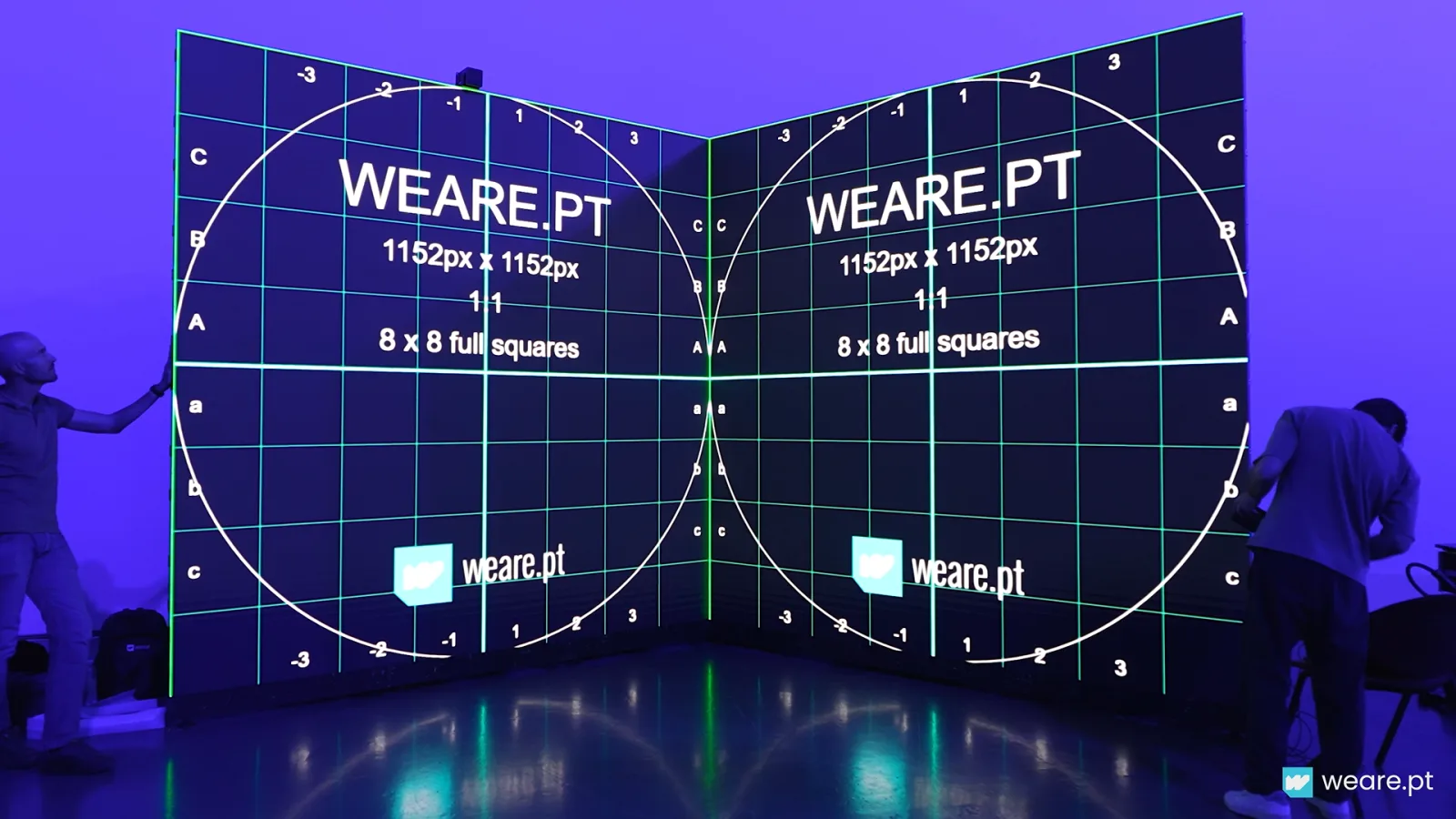
For that project, a 3 × 6 metre LED wall was installed at the event. On its own, it was a passive display. We Are Interactive added a rotating LiDAR sensor, a computer and custom software to turn it into an interactive surface.
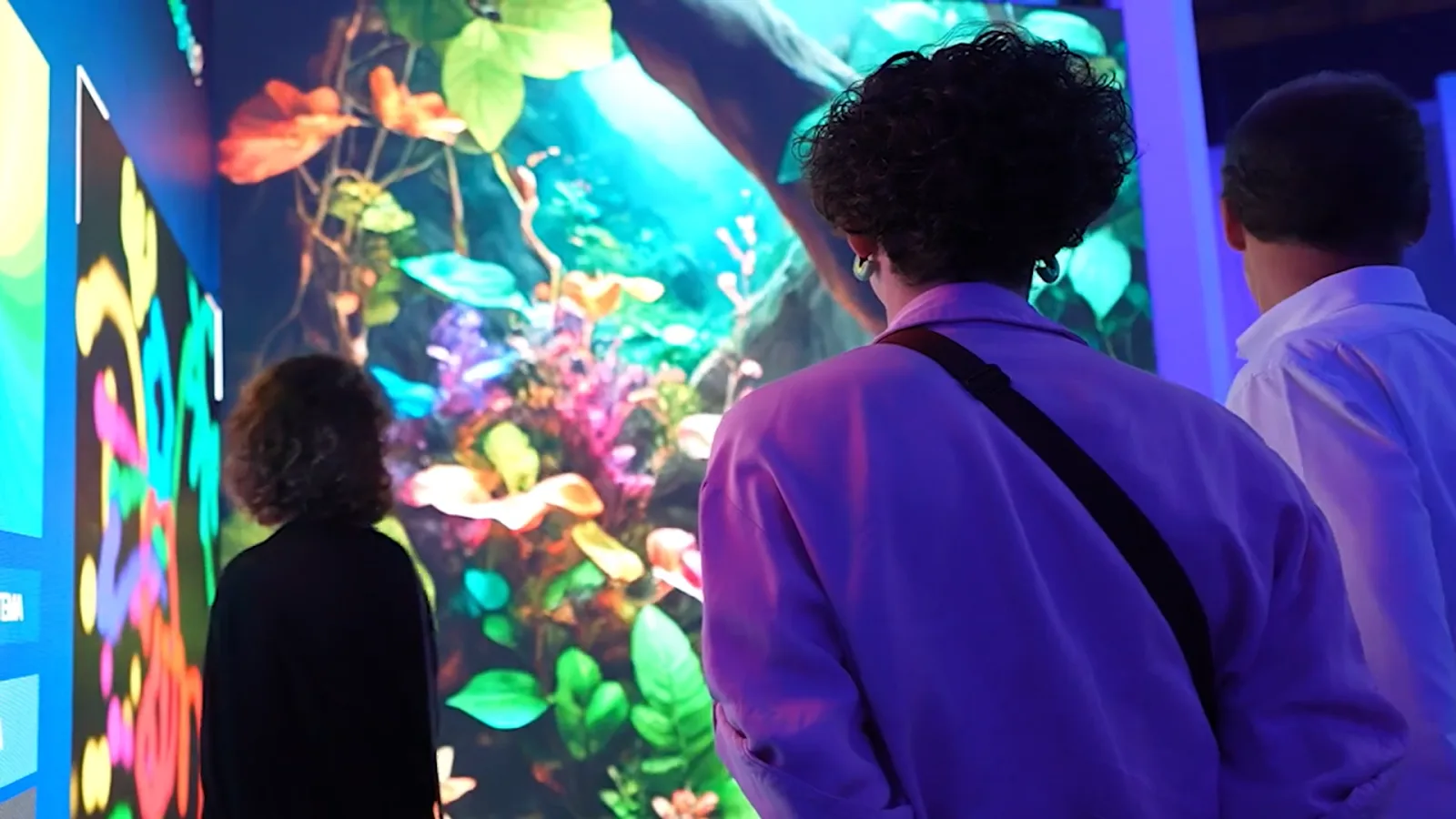
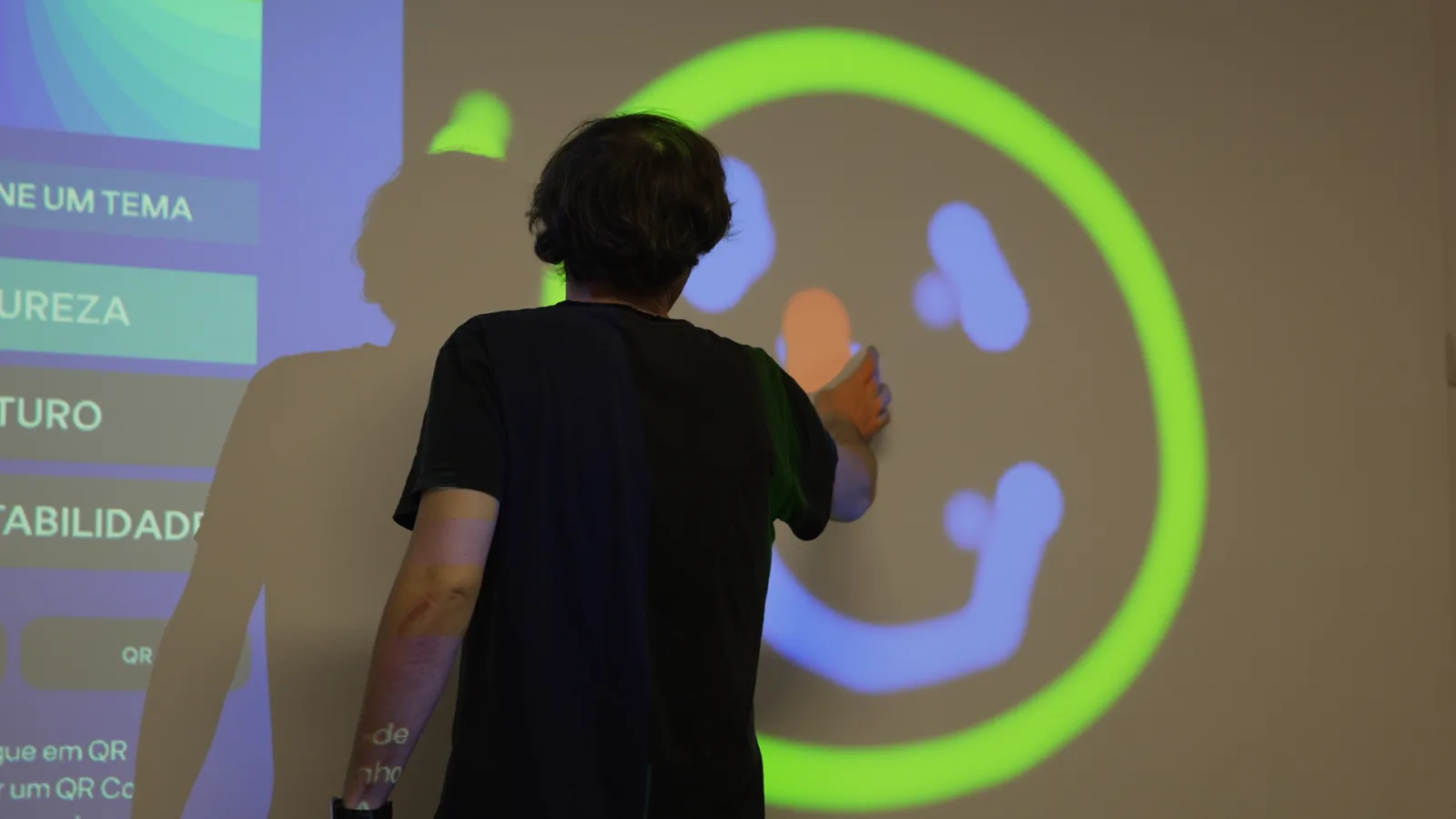
As visitors moved their hands across the wall, the LiDAR data was translated into X and Y coordinates. Those coordinates powered a paint-like interaction, creating streaks of light in response to the visitor’s movements. The drawing was then interpreted through AI and transformed into patterns of leaves, flowers and other sustainability-inspired imagery.
The experience showed the visitor’s movement and the AI-generated interpretation side by side, creating a visible connection between a simple gesture and the final artwork.
“We wanted the interaction to feel like magic People were mesmerized by the results.”
Eduardo — We Are Interactive
The software behind the experience was built by We Are Interactive using a combination of tools, including TouchDesigner and Python scripts.
Rotating LiDAR and large-scale touch detection
LiDAR hardware comes in different configurations. A single-point sensor can be useful when the system only needs to measure one distance. For example, entering a defined area could shorten the measured distance and trigger an event.
For a large interactive surface, We Are Interactive uses rotating LiDAR. The sensor used for the project scans a little more than 180 degrees across the surface, creating a two-dimensional detection area that software can interpret like a large touch plane.
The sensor currently used by the studio can cover a wall of up to approximately 30 metres, depending on the installation requirements.
Responsiveness matters: making the interaction feel immediate
For an interactive installation to feel natural, the response has to appear connected to the visitor’s action.
The LiDAR may be rotating, but the experience is better understood in terms of how many detection frames the system can process each second. A higher usable frame rate can produce smoother feedback, while distance and the characteristics of the system create practical limits.
For the 3 × 6 metre LED installation, We Are Interactive used detection at approximately 15 frames per second. For that interaction, it was enough to make the movement and visual response feel fluid.
This responsiveness is one reason choosing the right sensing technology matters. If a visitor draws in one position and the visual response appears somewhere else, the illusion breaks. The system stops feeling like an extension of the person’s movement and starts feeling unresponsive.
The practical side: calibration, mounting and pixel space
The sensor is only one part of a reliable installation.
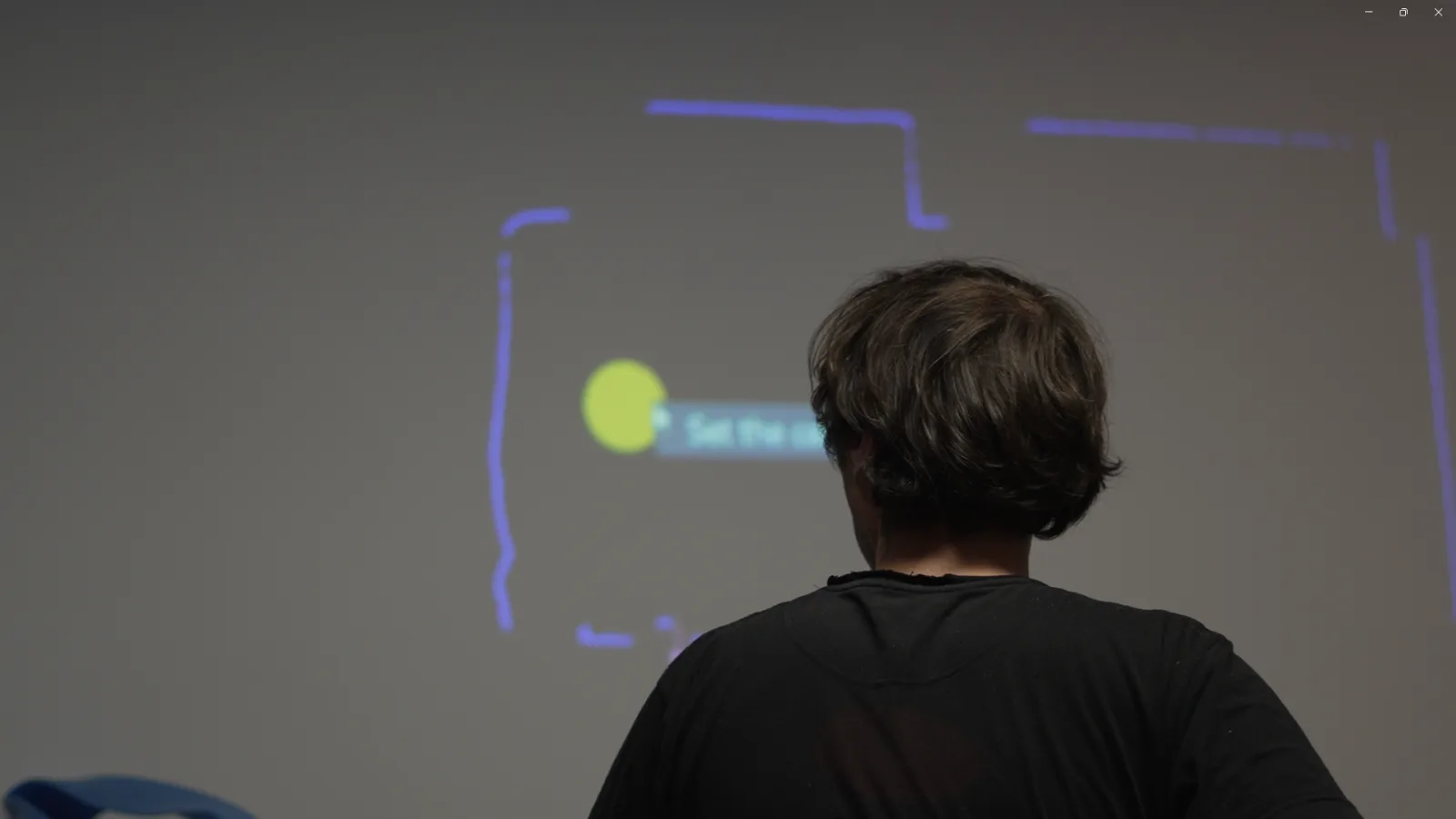
Once the LiDAR is positioned, its relationship to the interactive surface needs to remain fixed. If the sensor moves relative to the display, the coordinates no longer correspond correctly to the visual content and the system needs to be recalibrated.
For the featured LED-wall installation, calibration took up to around 30 minutes once the hardware was in position.
The more unexpected challenge came from the display system itself.
When an interactive studio works with third-party audiovisual equipment on site, knowing the screen resolution is not always enough. The team also needs to understand the full pixel space being provided by the AV system and exactly where the display sits within it. Otherwise, the coordinates used by the interactive application may not line up with the pixels appearing on the physical screen.
“Besides the resolution of the screen, it’s important that the AV company gives you the pixel space that you’re actually going to be using”
Eduardo — We Are Interactive
It is a small technical detail with a large effect on an installation. For an experience built around accurate interaction, the sensing system, software and display all need to agree on where the visitor’s action happened.
When should you not use LiDAR?
LiDAR is useful, but choosing it by default would go against the way we design interactive experiences.
Surface shape matters. If the goal is to create a touch-like plane, a flat surface is easier to work with than a heavily curved or irregular one. Environmental conditions matter too. Direct light can create challenges, and outdoor installations introduce questions around temperature, rain and the weather protection of the specific sensor being used.
The LiDAR unit used by We Are Interactive for the project discussed here is not IP67-rated, so it is not intended to be exposed to rain.
There are also cases where another technology simply matches the interaction better. A touchscreen may be better for precise information. A depth camera may be better for interpreting a body or silhouette.
The technology should follow the experience.
Start with the experience, not the sensor
LiDAR can make a wall interactive. It can make a floor react to movement. It can let a visitor draw across a six-metre display without turning that display into a conventional touchscreen.
But that is not what makes an installation memorable.
After years of watching people interact with installations, Eduardo’s conclusion is that visitors respond to the experience itself more than the technology behind it.
“You don’t have to be deploying crazy-expensive, state-of-the-art technology to achieve that.”
That principle shapes how We Are Interactive approaches interactive installations. First define what people should feel, understand or do. Then choose the technology that makes that interaction possible.
Sometimes that technology is LiDAR. Sometimes it is a touchscreen, a depth camera, a projection, audio or something much simpler.
The goal is not to show visitors how much technology is in the room. The goal is to make the room respond in a way worth remembering.
About We Are Interactive
We Are Interactive is a Portugal-based multimedia studio creating interactive experiences that connect digital technology with physical spaces. The studio develops custom installations for events, museums, brands and other environments, combining experience design with technologies such as LiDAR, real-time graphics, projection, sensors, AI and custom software.